The U.S. property management industry is entering a defining phase. As portfolios expand and investor expectations rise, many firms are discovering a widening gap between growth ambitions and operational capacity.
This challenge is not rooted in demand, but in people. By 2026, labor shortages, escalating salaries, and high employee churn are reshaping how property managers think about scale. Instead of adding more local headcount, forward-looking firms are reengineering their operations through strategic outsourcing that protects margins while enabling sustainable expansion.
The Hiring Reality Property Managers Can No Longer Ignore
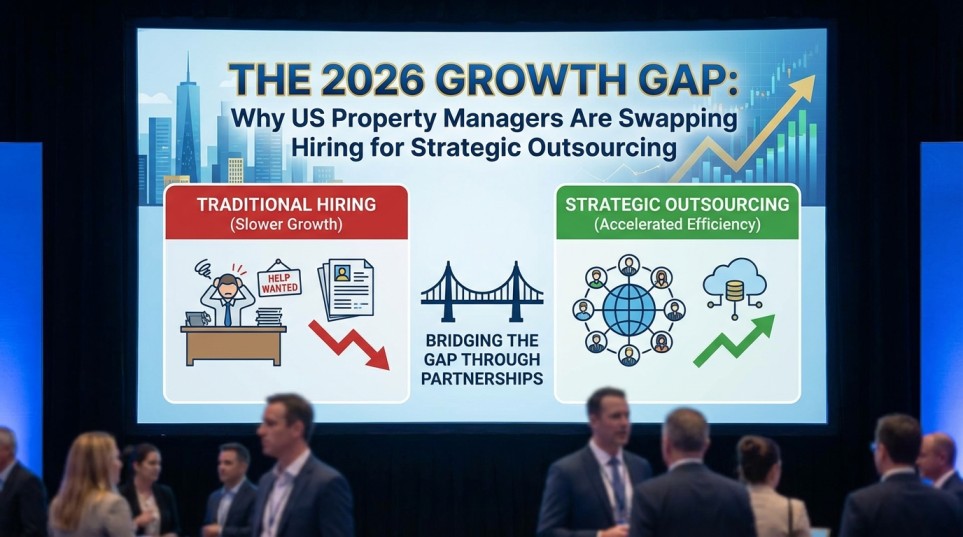
Recruiting skilled lease administrators, accountants, and compliance specialists in the U.S. has become increasingly difficult. Qualified professionals command premium compensation, benefits, and long onboarding cycles. Even after hiring, retention remains uncertain. Burnout and “job-hopping” have become common across back-office roles. For growing property management firms, this creates operational bottlenecks where growth outpaces internal capacity. Traditional hiring models simply struggle to deliver the flexibility needed to manage:
- Seasonal volume spikes (e.g., heavy leasing seasons).
- Rapid portfolio acquisitions.
- Complex multi-state expansions.
Outsourcing as a Competitive Strategy, Not a Cost Shortcut
The perception of outsourcing as a low-cost alternative is outdated. In 2026, outsourcing is about precision, resilience, and speed. Strategic outsourcing allows property managers to access trained teams, standardized workflows, and modern tools without absorbing the fixed costs of full-time staff. By adopting modern property management back office solutions, firms gain the ability to scale operations up or down while maintaining consistent service quality. This approach transforms the back office into a growth enabler rather than a constraint.
Closing the Growth Gap With Scalable Models
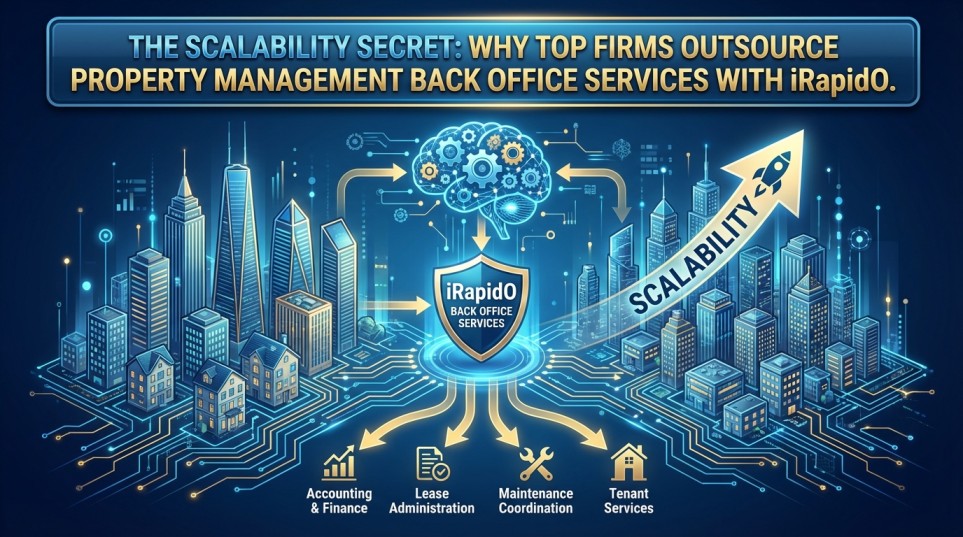
The growth gap emerges when operational infrastructure cannot keep pace with portfolio expansion. Outsourced teams bridge this gap by handling core functions such as:
- Lease abstraction & Data Entry
- Accounts Payable/Receivable & Reconciliations
- Vendor Coordination & Compliance Tracking
With professional property management back office services, firms reduce dependency on local hiring cycles. Leadership teams can finally shift their focus back to asset performance, tenant experience, and investor relationships instead of daily administrative pressure.
Why 2026 Favors Outsourcing Over Hiring
Several structural shifts are accelerating this transition. Remote collaboration is now the global standard, making distributed service delivery seamless. Technology-driven reporting and cloud-based property management systems (like AppFolio) allow outsourced teams to integrate directly into your existing workflows. When companies choose to outsource property management back office services, they convert fixed overhead into a variable, performance-driven model that aligns with business cycles and growth plans.
The Bottom Line: Predictable Growth
Successful property management firms in 2026 will not be defined by the size of their internal teams, but by the efficiency of their operating models. Firms leveraging specialized property management back office solutions report improved financial visibility, faster reporting cycles, and better compliance adherence. Exploring professional support is no longer just an option; it is a strategic imperative for long-term success in a competitive US market.