
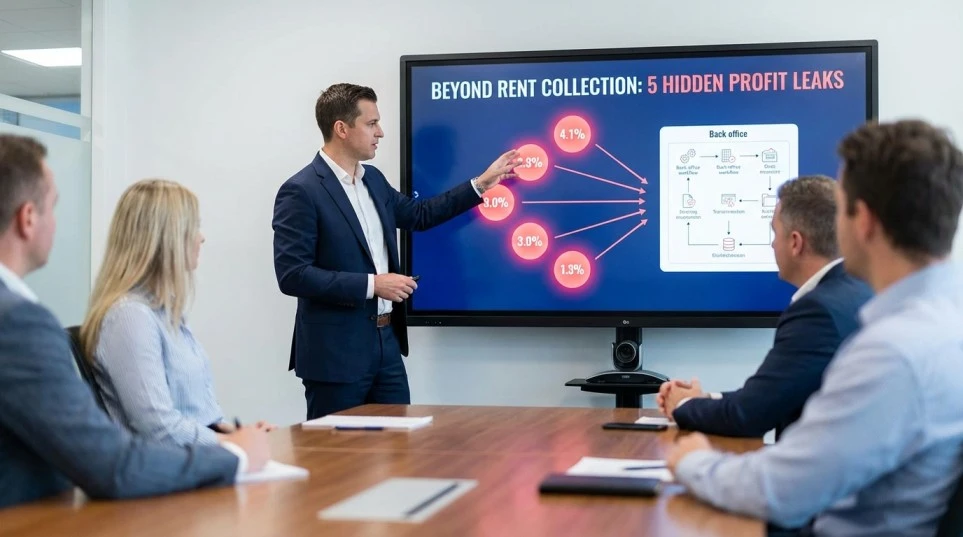
For high-level executives in the property management industry, the focus is often on the “big wins”: increasing portfolio size, improving occupancy rates, and ensuring timely rent collection. However, for a firm looking to maximize ROI, the real battle for profitability is often won or lost in the shadows of the back office.
While rent collection is the lifeblood of your revenue, inefficient administrative processes can act as a “slow leak,” draining your margins long before that revenue hits your bottom line. To stay ahead, many firms are adopting modular property management back office solutions that adapt to their specific portfolio size.
If you are looking to optimize your firm’s performance, keep an eye out for these five hidden profit leaks in your current operations.
1. Manual Data Entry and Human Error
High-level management understands that labor is the most significant line-item expense. When your skilled property managers or accountants are bogged down by manual data entry—inputting invoices, updating tenant records, or migrating data between platforms—you are paying a premium for low-value tasks. Beyond the hourly cost, the risk of human error in financial reporting can lead to costly reconciliation projects and frustrated owners.
2. Delayed Financial Reporting and Month-End Closes
In property management, information is only as valuable as it is timely. If your back office takes 15 days to close the books every month, your leadership team is making strategic decisions based on “stale” data. This lag creates a friction point with property owners who demand real-time transparency. An inefficient reporting cycle doesn’t just cost time; it costs you the trust of your high-net-worth clients.
3. Maintenance Coordination Gaps
Maintenance is often the largest variable expense in property management. Profit leaks occur here when work orders are not tracked efficiently, vendor insurance is allowed to lapse, or invoices are paid without proper verification against work completed. Without a dedicated back-office system to oversee the lifecycle of a work order, “minor” oversights can quickly balloon into thousands of dollars in lost revenue across a large portfolio.
4. The Overhead of Seasonal Scalability
The “hiring trap” is a common profit leak. Many firms hire full-time staff to handle peak seasons (such as the summer turn season), only to be overstaffed and burdened by high overhead during the slower winter months. Maintaining a fixed staff for a variable workload is a recipe for margin compression. Transitioning to a flexible model allows you to scale up or down without the “dead weight” of unnecessary payroll.
5. Underutilized Technology (Tech Debt)
Many firms invest heavily in top-tier property management software but only utilize 30% of its capabilities. The “leak” here is twofold: you are paying for features you aren’t using, and your team is likely still performing tasks manually that the software could automate. This often happens because the back-office team is too busy with daily “firefighting” to undergo the training necessary for optimization.
Plugging the Leaks
Identifying these leaks is the first step; the second is implementation. When you decide to outsource property management back office services, you aren’t just cutting costs; you are gaining a 24/7 operational partner. This strategic shift allows your core team to focus on high-level asset management and business development while experts handle the granular, repetitive tasks that typically cause profit drainage.
By tightening your back-office operations, you ensure that the revenue you work so hard to collect actually stays in your pocket.
Ready to optimize? Explore our comprehensive property management back office services and see how iRapidO can transform your operations.