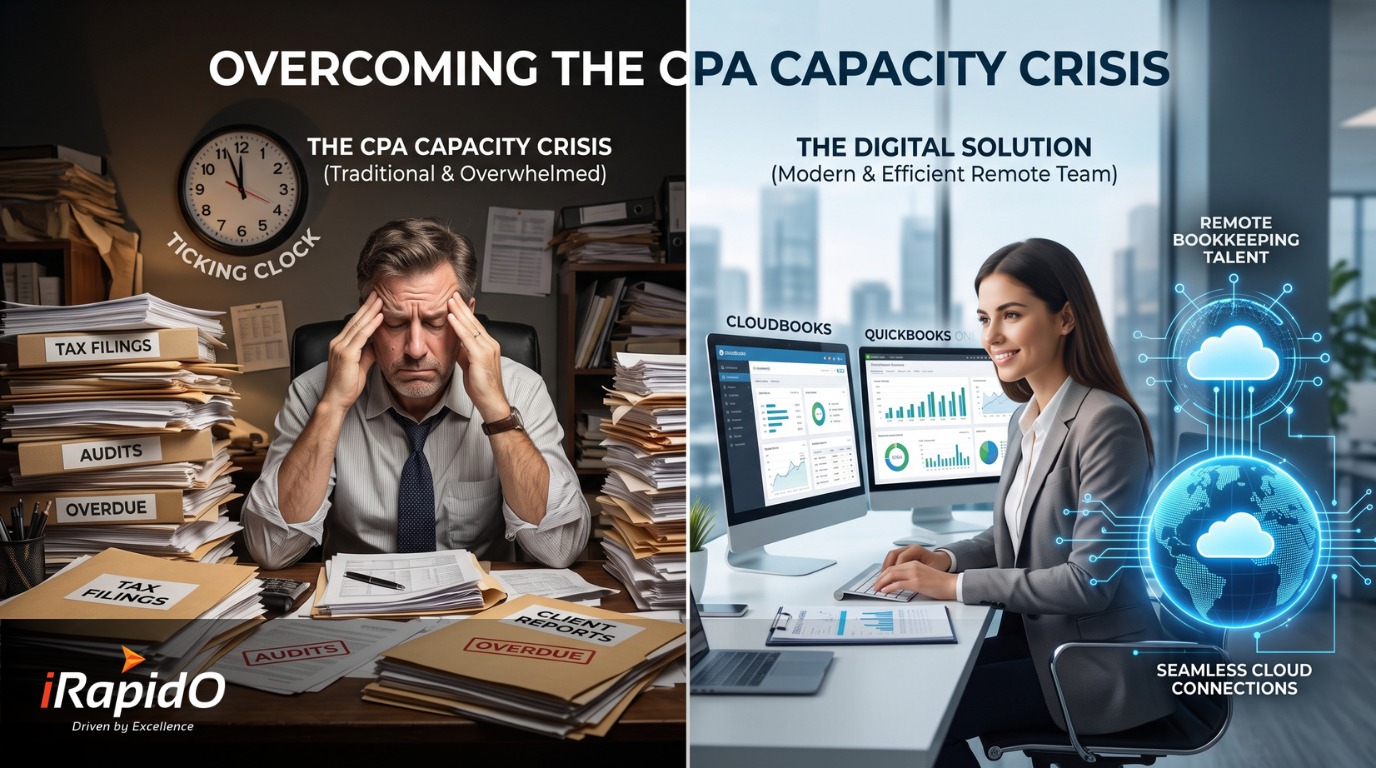
Accounting practices and corporate finance departments across North America are experiencing a persistent structural challenge: qualified bookkeepers and senior accountants are leaving the profession faster than new talent enters the market. For CPA firm partners and managing directors, this ongoing labor constraint creates significant operational risk, capping firm growth and straining domestic staff.
When localized bookkeeping support is unavailable or excessively costly, senior CPAs often spend valuable billable hours handling routine transactional processing, data categorization, and ledger cleanup. This operational misalignment degrades partner realization rates and limits high-margin advisory services. To protect service margins and maintain operational bandwidth, progressive CPA practice owners regularly choose to hire offshore bookkeeper teams to manage high-volume transactional workloads remotely.
Strategic Imperative: Implementing professional outsourced bookkeeping services enables firms to secure skilled, scalable financial capacity. This approach frees onshore CPAs to focus on strategic tax planning, client consulting, and revenue growth.
Analyzing the Economics of Local vs. Offshore Bookkeeping Delivery
Relying exclusively on localized hiring models exposes firms to rising wage demands and recruitment friction. Beyond competitive base compensation, maintaining an in-house bookkeeping staff incurs compounding costs:
- Payroll Overhead: FICA, unemployment taxes, workers’ compensation, and benefits packages increase fixed operating costs by 20% to 30%.
- Recruitment Delay: Sourcing and vetting qualified local personnel takes an average of two months, creating severe backlogs during critical financial reporting cycles.
- Capacity Inefficiency: Maintaining fixed domestic headcount creates excess cost overhead during off-peak seasons, while leaving the firm understaffed during peak tax windows.
Leveraging remote capability centers allows firms to convert variable seasonal workloads into a predictable operational cost structure. Practice owners scale resource allocation upward during busy quarters and contract capacity smoothly as transactional volume stabilizes.
Core Advantages of Virtual Bookkeeping Integration
1. Overnight Ledger Processing via Time-Zone Alignment
Global delivery centers utilize time-zone differences to optimize turn times. While your onshore staff finishes their workday, offshore teams begin categorizing credit card transactions, processing bank feeds, and updating general ledgers. Onshore CPAs start each day with fully reconciled accounts, speeding up client delivery.
2. Mastery Across Enterprise Software Stacks
Modern remote accounting specialists undergo systematic technical training across major business software platforms. Whether your firm uses QuickBooks Online, Xero, Sage, or specialized tax preparation tools such as Intuit Lacerte, ProConnect, and Drake Tax, offshore specialists integrate directly into your established workflow protocols.
3. Risk Mitigation & Continuity Architecture
Relying on a single internal bookkeeper creates key-person operational risk. If an employee resigns or takes extended leave during peak season, processing stalls. Offshore capability centers utilize structured team models where secondary accountants are cross-trained on your accounts, ensuring continuous service delivery.
Institutional Data Security and Regulatory Compliance
Maintaining confidential client records demands strict enterprise-grade security protocols. Professional BPO delivery centers implement comprehensive security controls to protect client information. Remote specialists operate within secure, biometric-controlled environments featuring clean-desk rules and restricted network access. System interactions occur through encrypted VPN tunnels using multi-factor authentication, ensuring corporate data remains protected inside your firm’s secure cloud infrastructure.
Frequently Asked Questions
Why do US firms hire offshore bookkeepers?
Hiring offshore bookkeepers grants immediate access to certified financial professionals at a predictable operational cost. It eliminates local recruiting delays, reduces payroll tax burdens, and provides overnight processing capabilities.
How do virtual bookkeeping services integrate with existing CPA workflows?
Virtual bookkeepers log into your firm’s cloud-based accounting systems via secure access channels. They operate under your direct instructions and established Standard Operating Procedures (SOPs), working as an invisible extension of your internal team.
Are remote bookkeeping services secure for sensitive financial data?
Yes. Managed BPO delivery centers utilize encrypted VPN connections, secure dual-factor authentication, biometric facilities, and clean-desk policies to maintain strict data confidentiality and regulatory compliance.

About iRapidO Global
iRapidO is a premier business process management firm providing specialized Remote Capability Center solutions. We enable US businesses and CPA practices to expand their operational capacity, reduce overhead, and drive sustainable growth.