For mid-market CFOs and Managing Directors evaluating their 2026 operational budgets, the debate over in-house versus outsourced accounting has fundamentally changed.
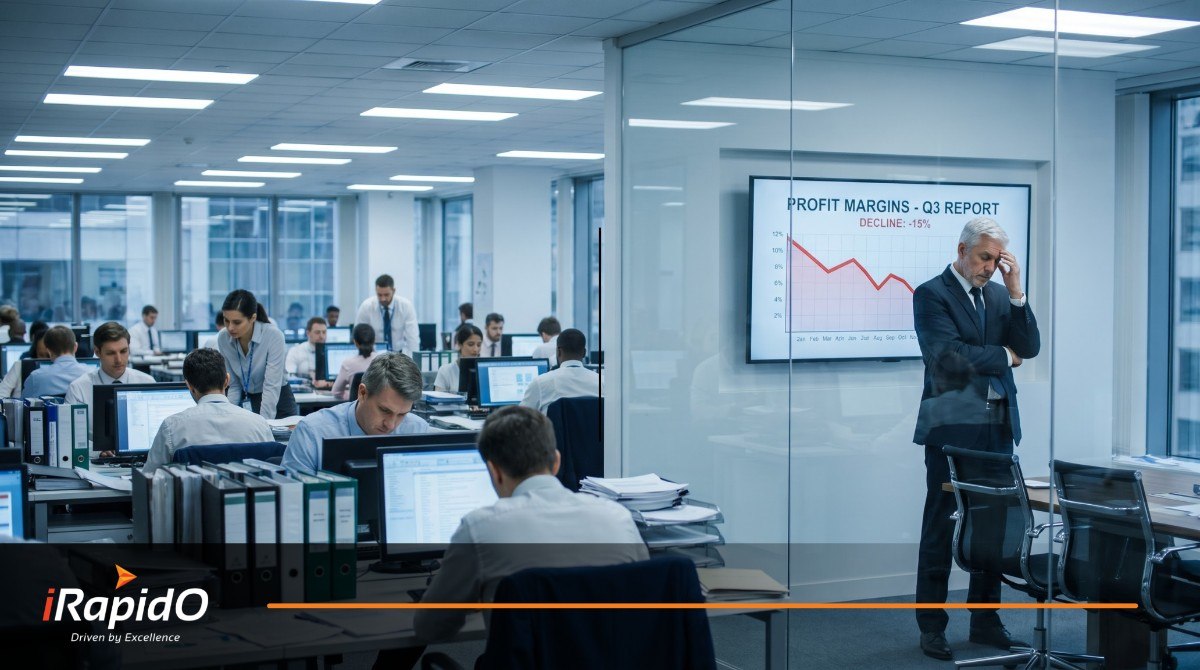
Historically, building a captive, internal finance department was viewed as the safest way to maintain operational control. Today, however, aggressive talent shortages, ballooning infrastructure costs, and sudden mid-year regulatory shifts are turning rigid in-house teams into massive administrative bottlenecks. As enterprise growth accelerates, financial leadership must aggressively audit where they are bleeding resources.
The Executive Perspective
Why are top-tier financial leaders abandoning the traditional captive model? Because in today’s market, relying on a fully internal team forces you to prioritize overhead over scalable agility.
In-House Accounting: The Hidden Cost Avalanche
When an organization commits entirely to internal accounting, management often drastically underestimates the compounding operational friction. The true cost of full-time hires goes far beyond annual compensation packages:
| Operational Friction | The True Cost to the Enterprise |
|---|---|
| Talent Acquisition & Attrition | Sourcing, training, and retaining qualified CPAs is a constant drain. When an internal accountant leaves, the system collapses until a replacement is onboarded, putting vital reporting cycles at risk. |
| Scalability & Idle Capacity | In-house teams struggle to absorb transactional spikes. Firms end up over-hiring to survive tax season, resulting in bloated payroll expenses during off-peak months. |
| Infrastructure Overhead | Beyond wages, internal models force enterprises to absorb continuous hardware costs, premium software licensing, office space, and IT security infrastructure for every team member. |
| Strategic Distraction | When an internal CFO is forced to manage the daily minutiae of data entry and payroll compliance, they lose the bandwidth required for high-level cash flow forecasting and margin optimization. |
The Strategic Alternative: Remote Capability Centers
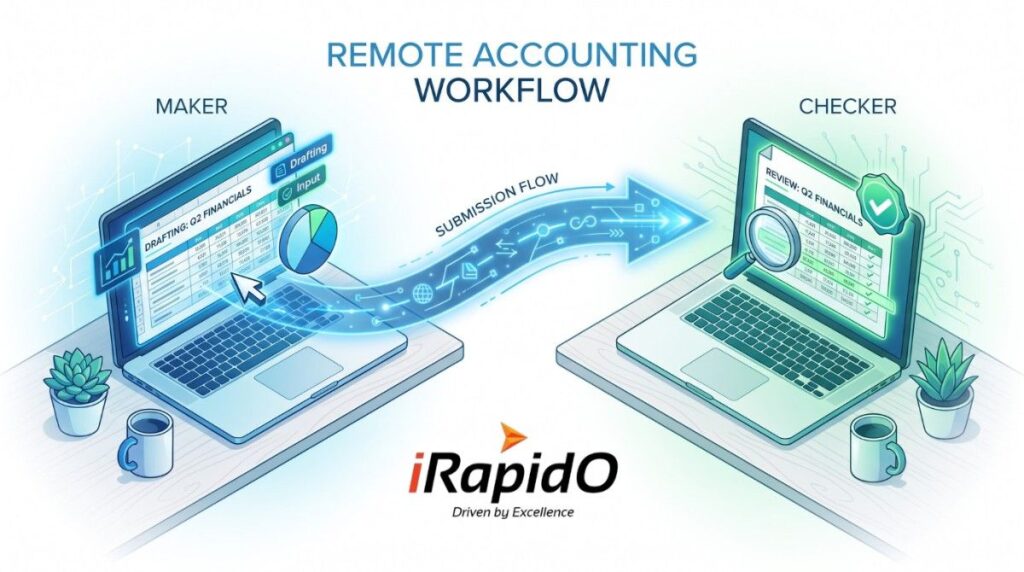
To eliminate these scaling roadblocks, forward-thinking organizations are completely restructuring their back-office architecture. By deploying outsourced accounting services, leadership can decouple routine transactional execution from high-level financial strategy.
Partnering with a B2B remote capability center like iRapidO converts rigid fixed overhead into a flexible, scalable model. Instead of paying for idle time and expensive infrastructure, you leverage a dedicated offshore team to manage accounts payable, reconciliations, and compliance filings. This allows your onshore executives to focus purely on aggressive growth rather than administrative survival.
The Operational Shift: The transition from an in-house model to a specialized offshore partner instantly protects your EBITDA. It replaces dependency on a single employee with a robust, multi-layered financial system designed to scale seamlessly with your enterprise.
Frequently Asked Questions
Does moving away from in-house accounting mean losing control?
Not at all. A specialized remote capability center acts as an extension of your existing team. Your onshore CFO or financial head retains complete strategic control and oversight, while the offshore team manages the time-consuming daily execution and data processing.
What makes iRapidO different from a standard offshore contractor?
We do not provide freelancers; we build dedicated remote capability centers. iRapidO delivers pre-vetted, highly structured financial teams that integrate deeply with your enterprise processes, ensuring consistency, security, and strict accountability.
Is Your Back Office Built to Scale?
Stop letting high overhead and talent dependencies drain your operational budget.
Connect with our executive team to compare your current in-house costs against the efficiency of a dedicated iRapidO capability center.
Speak with an iRapidO Operations Expert
About iRapidO Global
iRapidO is a business process management firm specializing in Remote Capability Center solutions. Operating from our global delivery center, we empower US enterprises and financial leaders to scale operations, control overhead, and maintain long-term competitive advantage.